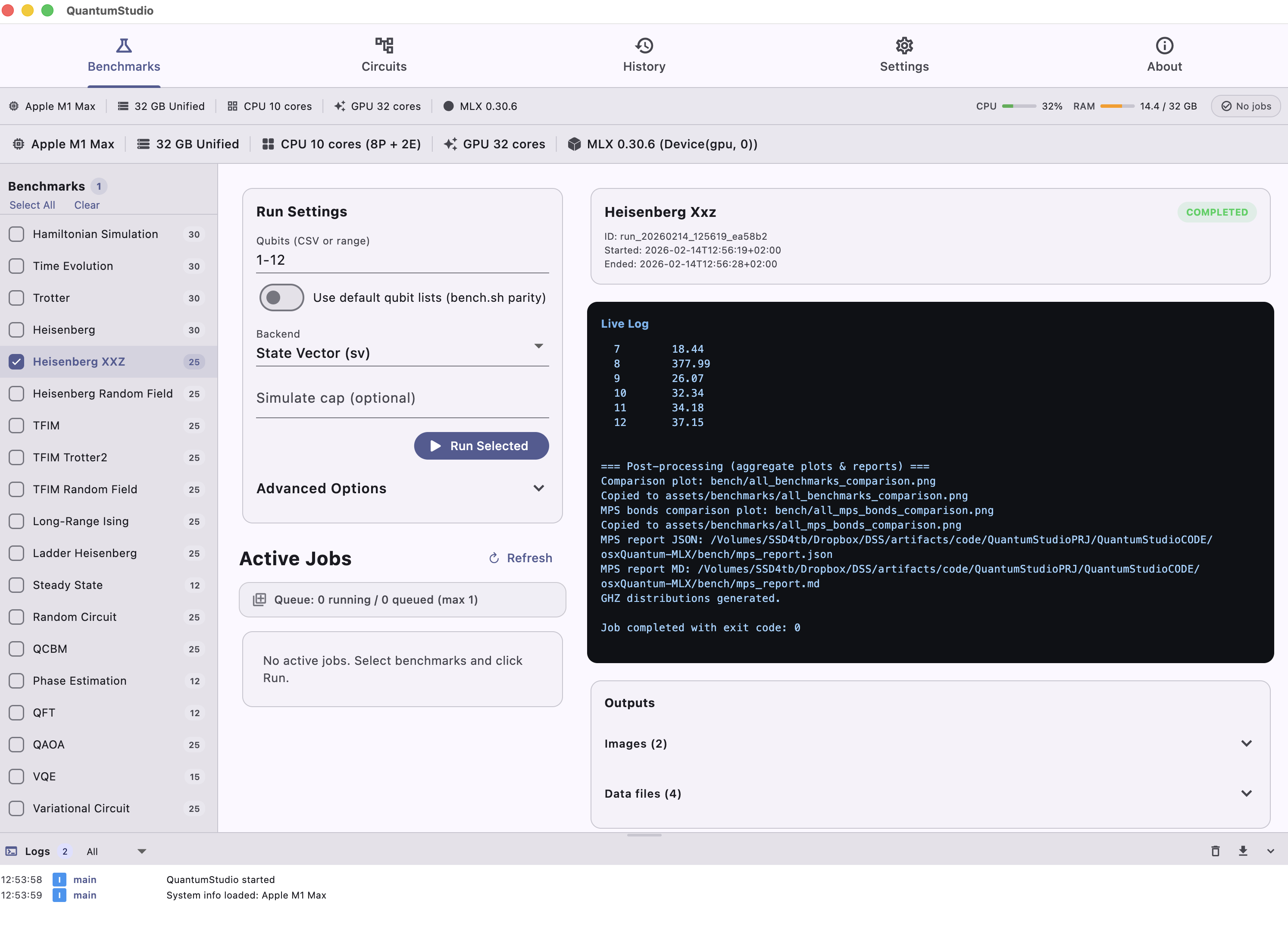
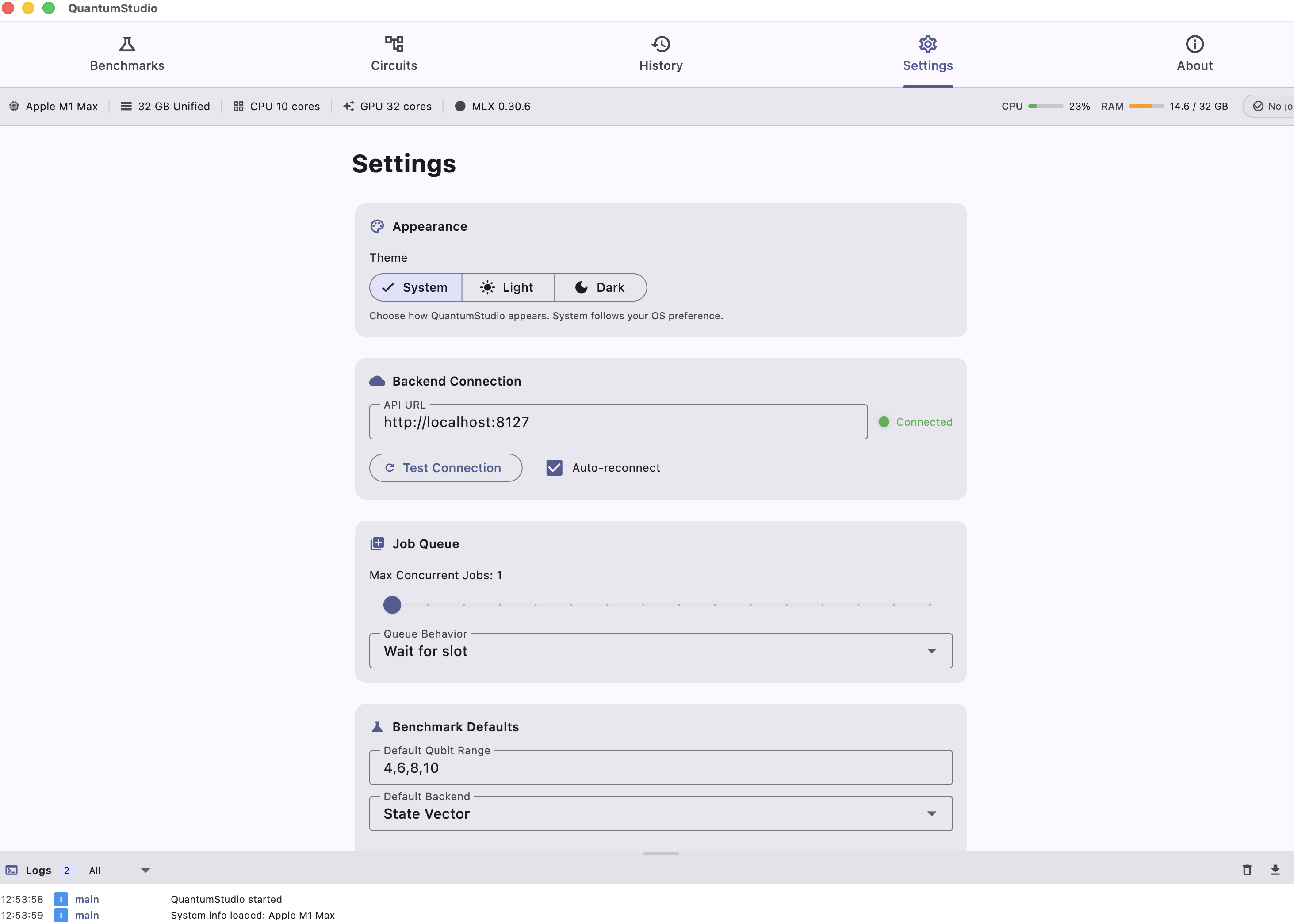
osxQuantum productizes the core results from our accepted QUANTICS 2026 LNCS paper on mlxQ and unified-memory simulation on Apple Silicon.
Most high-performance quantum simulators are optimized around CUDA and discrete GPU memory models. Apple Silicon works differently: CPU and GPU share one unified memory pool, which removes explicit host-device copy overhead and simplifies the execution model for state-vector workloads. There is currently no native MLX quantum simulator runtime, so osxQuantum ships a local simulator stack built around mlxQ to close that gap.
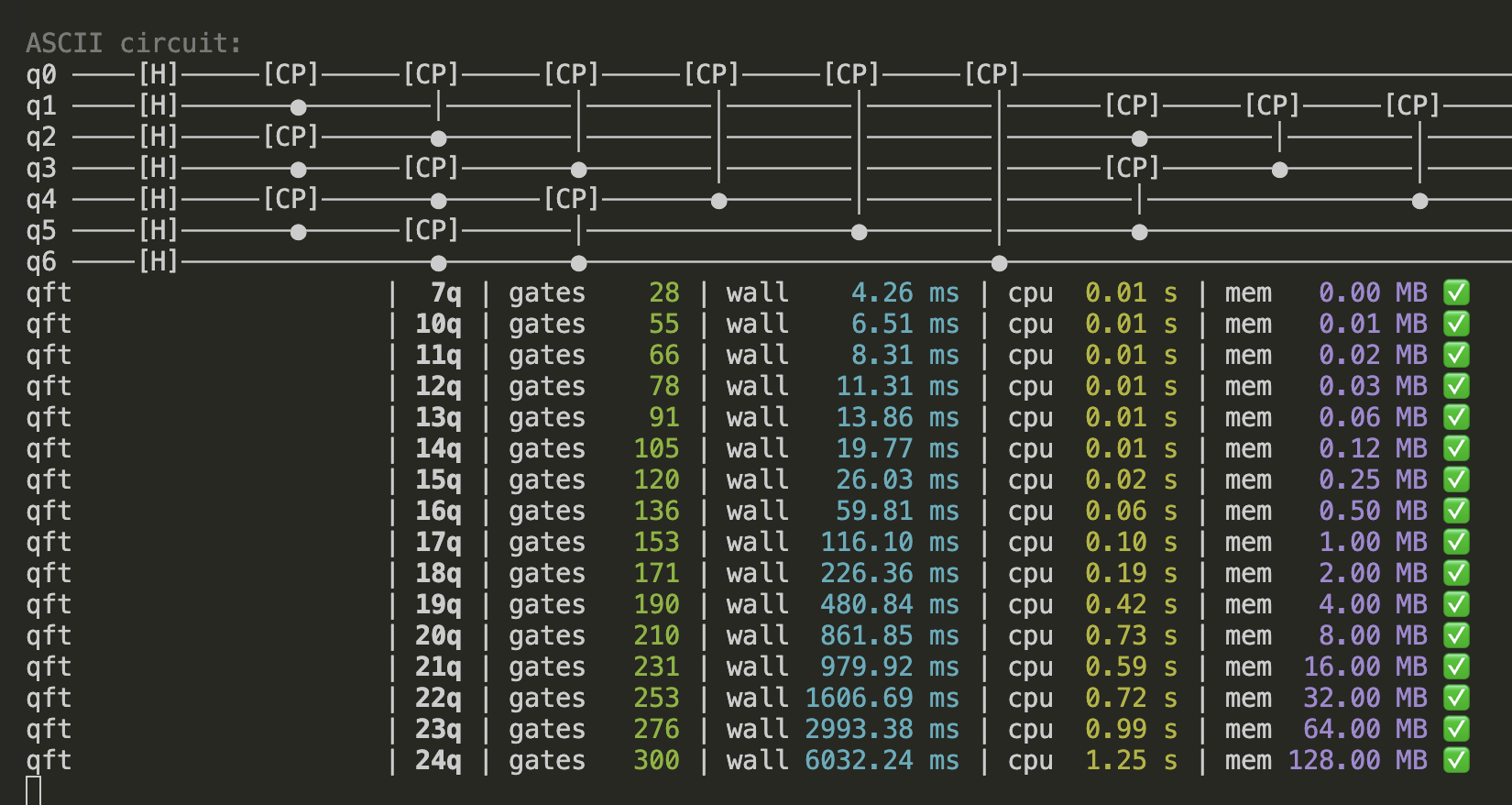
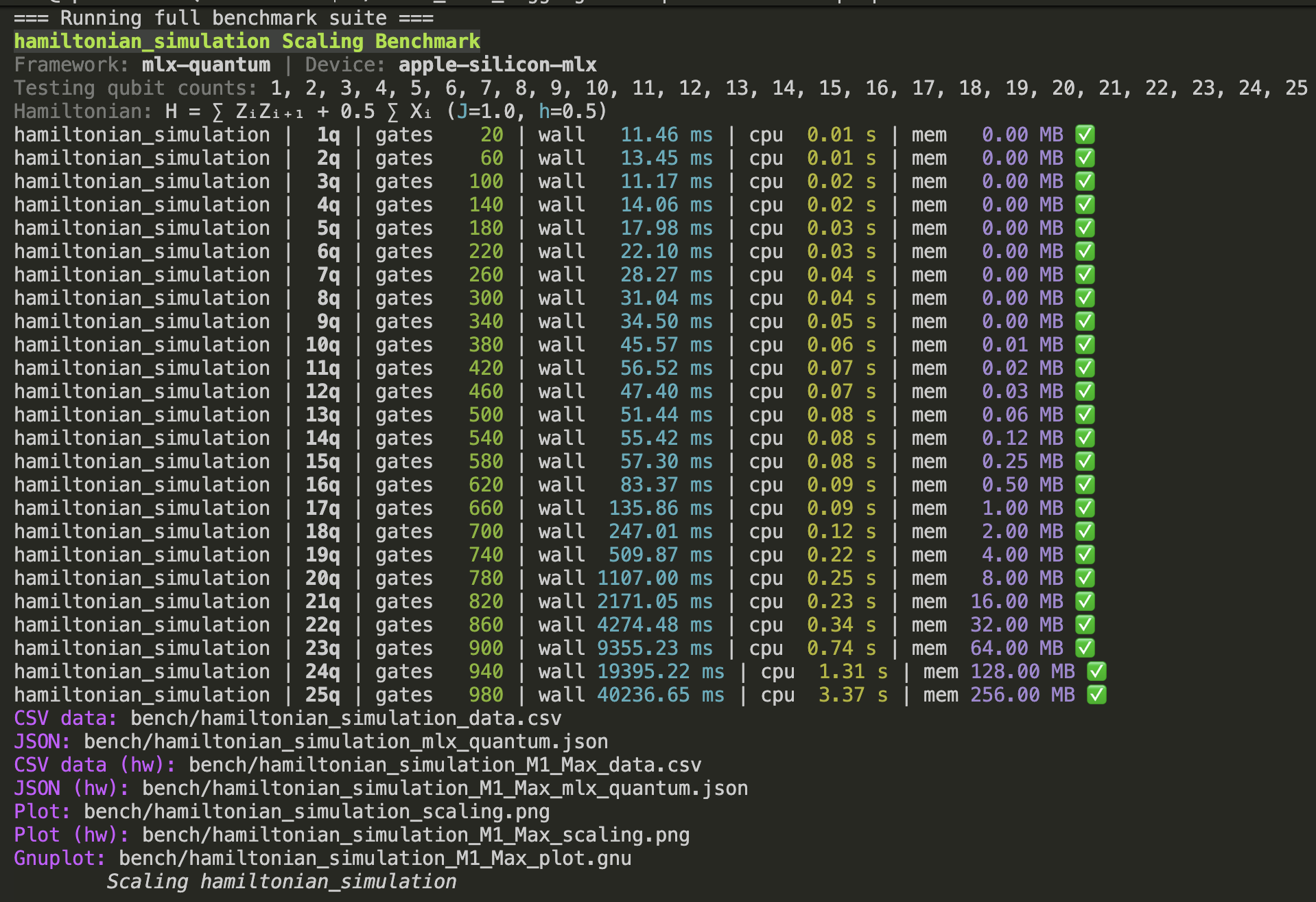
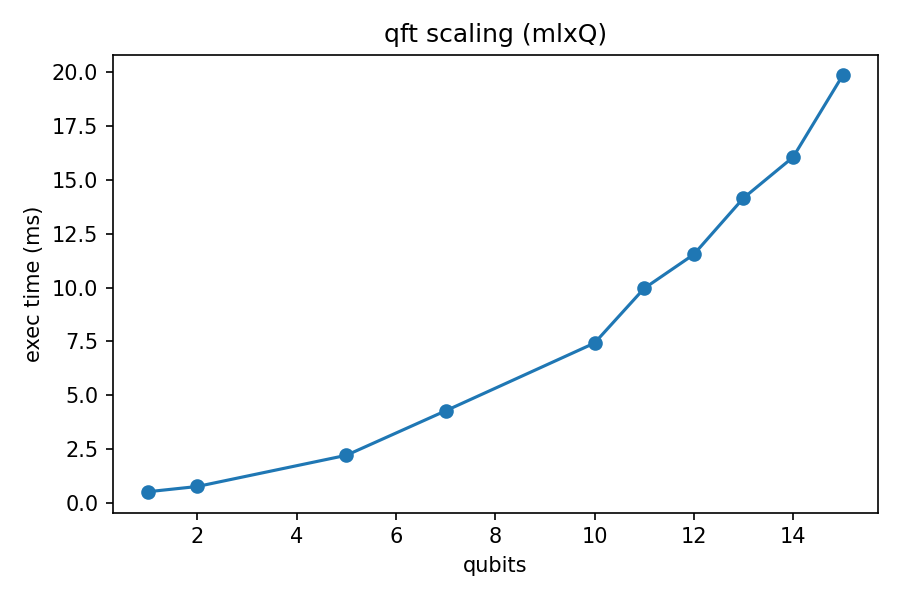
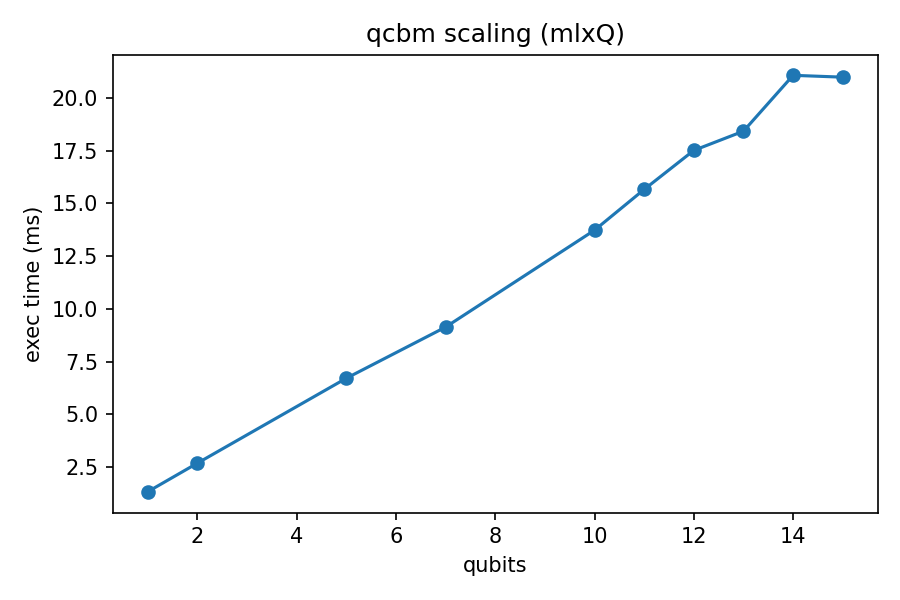
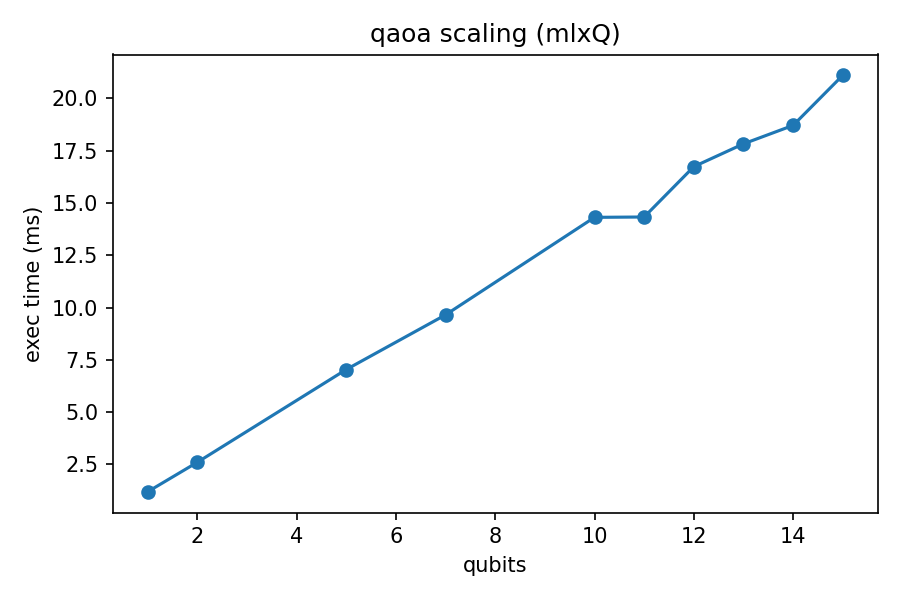
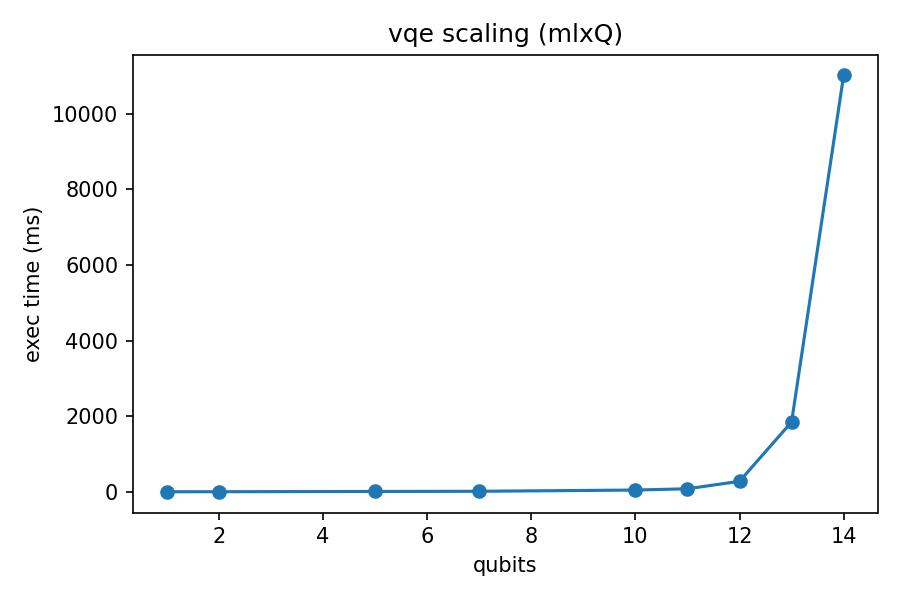
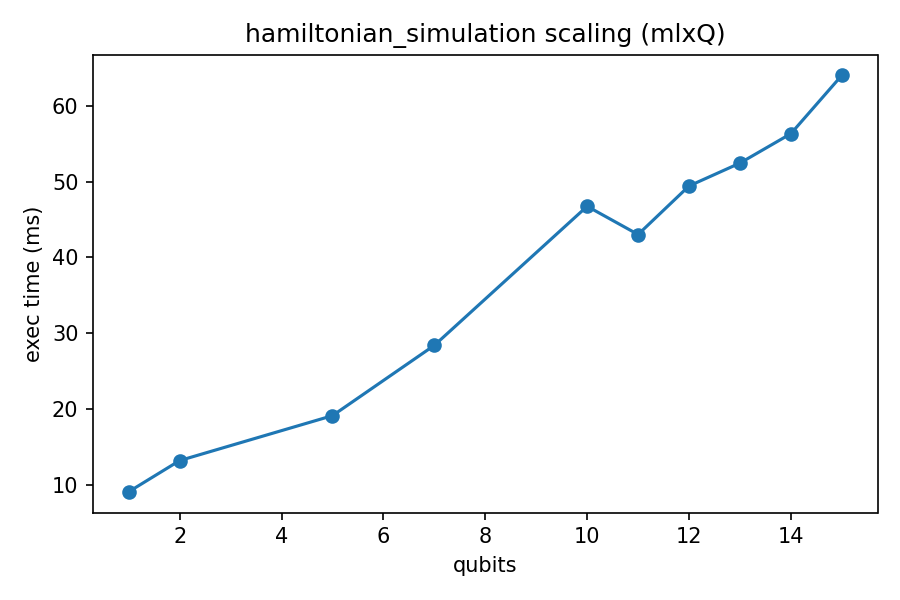
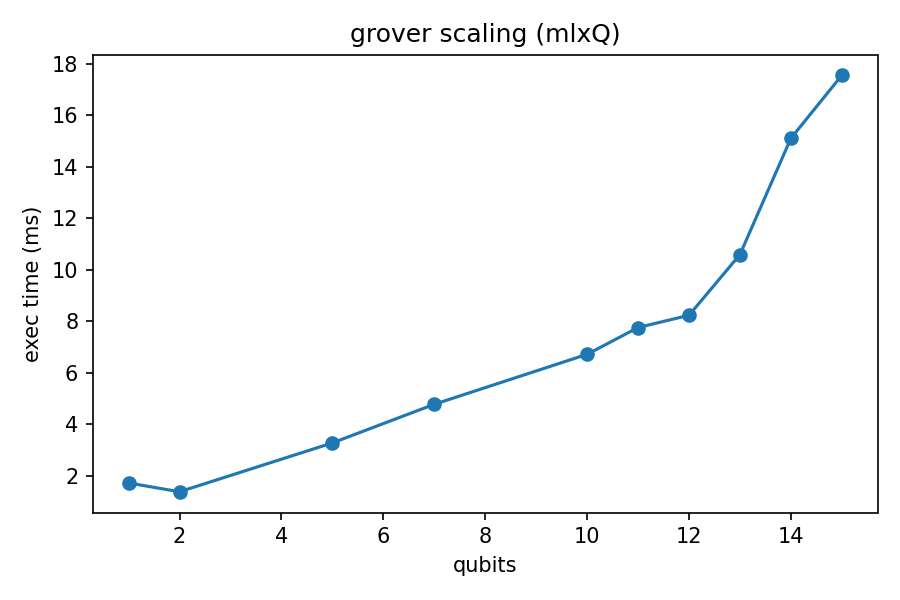
In our M1 Max evaluations (32 GB unified memory), mlxQ completed 25-qubit reference workloads including QFT in 7.03 ± 0.12 s, QAOA in 11.07 ± 0.21 s, and Hamiltonian simulation in 40.73 ± 0.82 s. The same architecture supports reproducible benchmark artifacts (CSV/JSON), OpenQASM 2.0 circuit import, and broad algorithm coverage across VQE, QAOA, QCBM, QFT, Grover, and time-evolution workflows.
Reliability is built into the stack: the framework is validated with 230+ regression tests and benchmark alignment against widely used suites and ecosystems, including QASMBench, PennyLane, Yao.jl, and Qulacs. The website experience you are viewing is the product-facing layer over that same technical foundation.