1) The Paper
The paper defines the benchmark methods, hardware assumptions, algorithm coverage, and measured results on Apple Silicon. It is the technical reference for claims made across the project.
osxQuantum is a four-part project: a peer-reviewed paper, the osxQ simulator stack, the QuantumStudio desktop UI, and an exhaustive problem book with worked solutions. There is no native MLX quantum simulator available today, so osxQ provides a local simulator layer for QFT, QAOA, VQE, Hamiltonian workflows, and OpenQASM runs.
QuantumStudio combines research, software, and pedagogy in one workflow that moves from theory to execution to verification.
The paper defines the benchmark methods, hardware assumptions, algorithm coverage, and measured results on Apple Silicon. It is the technical reference for claims made across the project.
osxQ (mlxQ-based) is the local simulation engine. It implements state-vector execution, gate libraries, algorithm routines, and OpenQASM support for reproducible runs on macOS.
QuantumStudio is the desktop interface for configuring runs, launching benchmark suites, monitoring execution, and exporting structured artifacts for analysis and reporting.
The companion book consolidates extensive problem sets and worked solutions, aligned with the simulator and paper benchmarks, so students can solve by hand and validate with osxQ.
osxQuantum productizes the core results from our IEEE QSYS paper on mlxQ and unified-memory simulation on Apple Silicon.
Most high-performance quantum simulators are optimized around CUDA and discrete GPU memory models. Apple Silicon works differently: CPU and GPU share one unified memory pool, which removes explicit host-device copy overhead and simplifies the execution model for state-vector workloads. There is currently no native MLX quantum simulator runtime, so osxQuantum ships a local simulator stack built around mlxQ to close that gap.
In our M1 Max evaluations (32 GB unified memory), mlxQ completed 25-qubit reference workloads including QFT in 7.03 ± 0.12 s, QAOA in 11.07 ± 0.21 s, and Hamiltonian simulation in 40.73 ± 0.82 s. The same architecture supports reproducible benchmark artifacts (CSV/JSON), OpenQASM 2.0 circuit import, and broad algorithm coverage across VQE, QAOA, QCBM, QFT, Grover, and time-evolution workflows.
Reliability is built into the stack: the framework is validated with 230+ regression tests and benchmark alignment against widely used suites and ecosystems, including QASMBench, PennyLane, Yao.jl, and Qulacs. The website experience you are viewing is the product-facing layer over that same technical foundation.
Key technical points from the IEEE mlxQ paper, translated into practical product guidance for osxQuantum users.
Apple Silicon is not a discrete GPU workflow. CPU and GPU share one physical memory pool, so state vectors can stay resident without explicit host-device transfers. This reduces orchestration overhead and improves interactive iteration for many NISQ-era workloads.
MLX is widely used for ML workloads, but there is currently no native MLX quantum simulator runtime. osxQuantum addresses that gap by providing a local state-vector simulator stack (mlxQ), gate libraries, algorithm modules, and benchmark tooling in one desktop workflow.
The benchmark families follow community baselines and algorithm classes used in research practice: QASMBench/OpenQASM circuits, QFT/phase estimation, variational methods (VQE/QAOA/QCBM), Grover search, and Hamiltonian simulation via Trotter-Suzuki decomposition.
Runs generate structured artifacts with consistent timing outputs and machine-readable exports. The goal is not just raw speed, but repeatable experiment bookkeeping for publication, classroom use, and cross-framework comparison.
Representative measurements from the M1 Max evaluation setup in the IEEE manuscript (32 GB unified memory, Apple Silicon, MLX backend).
| Algorithm | Qubits | Time (s) | Notes |
|---|---|---|---|
| QFT | 25 | 7.03 ± 0.12 | Complete controlled-phase ladder |
| QAOA (ring) | 25 | 11.07 ± 0.21 | MaxCut-style alternating operator schedule |
| QCBM (9 layers) | 25 | 26.28 ± 0.54 | Hardware-efficient variational stack |
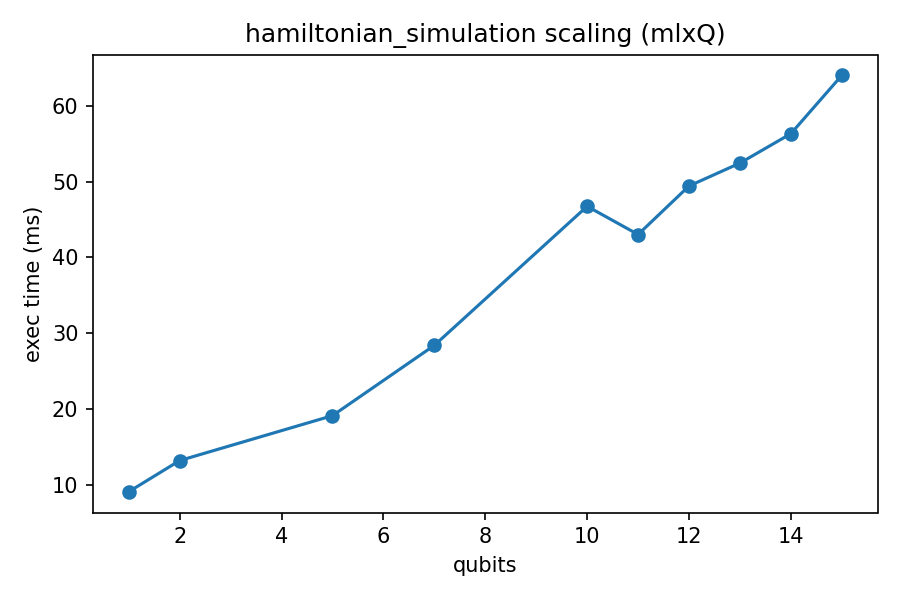
| Hamiltonian Simulation | 25 | 40.73 ± 0.82 | Trotter-Suzuki decomposition |
| Grover Search | 25 | 113.26 | Quadratic search primitive |
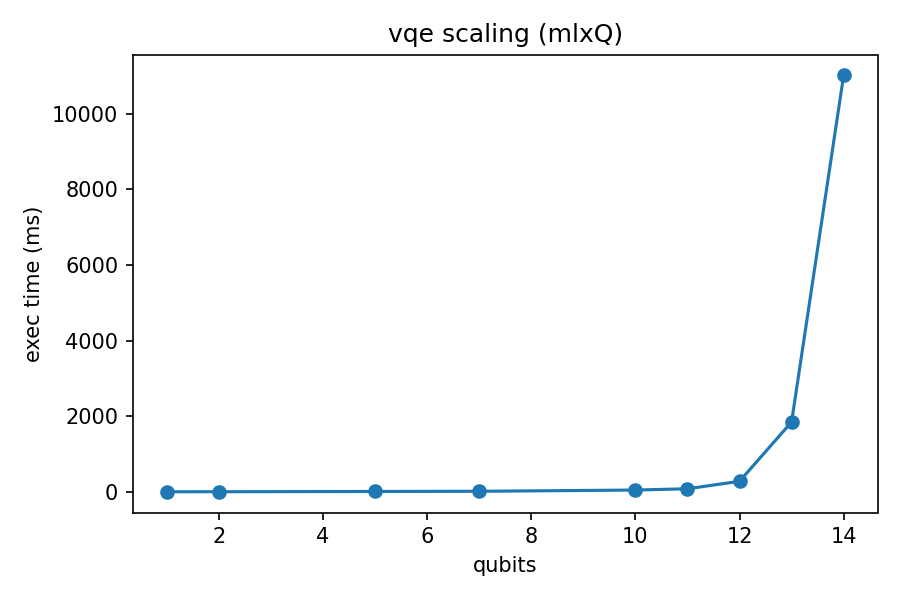
| VQE (optimization-heavy) | 15 | 16718.0 | 100 iterations, parameter-shift gradients |
The paper reports 235 validation tests spanning gate correctness, parser behavior, algorithm outputs, and tutorial-backed educational examples.
Regression coverage includes gate operations, state preparation, algorithm-level checks, and framework parity validations.
Parser and execution coverage includes single-, two-, and three-qubit gate families with user-defined gate inlining and practical benchmark circuit compatibility.
Benchmark families are aligned with widely used ecosystems (PennyLane, Yao.jl, Qulacs, QuantumToolbox.jl, QASMBench) for stronger external comparability.
Timing outputs and benchmark summaries are emitted as machine-readable CSV/JSON artifacts for independent reruns and publication appendices.
Complex64 state vectors scale from 8 MB at 20 qubits to 256 MB at 25 qubits, 8 GB at 30 qubits, and 256 GB at 35 qubits.
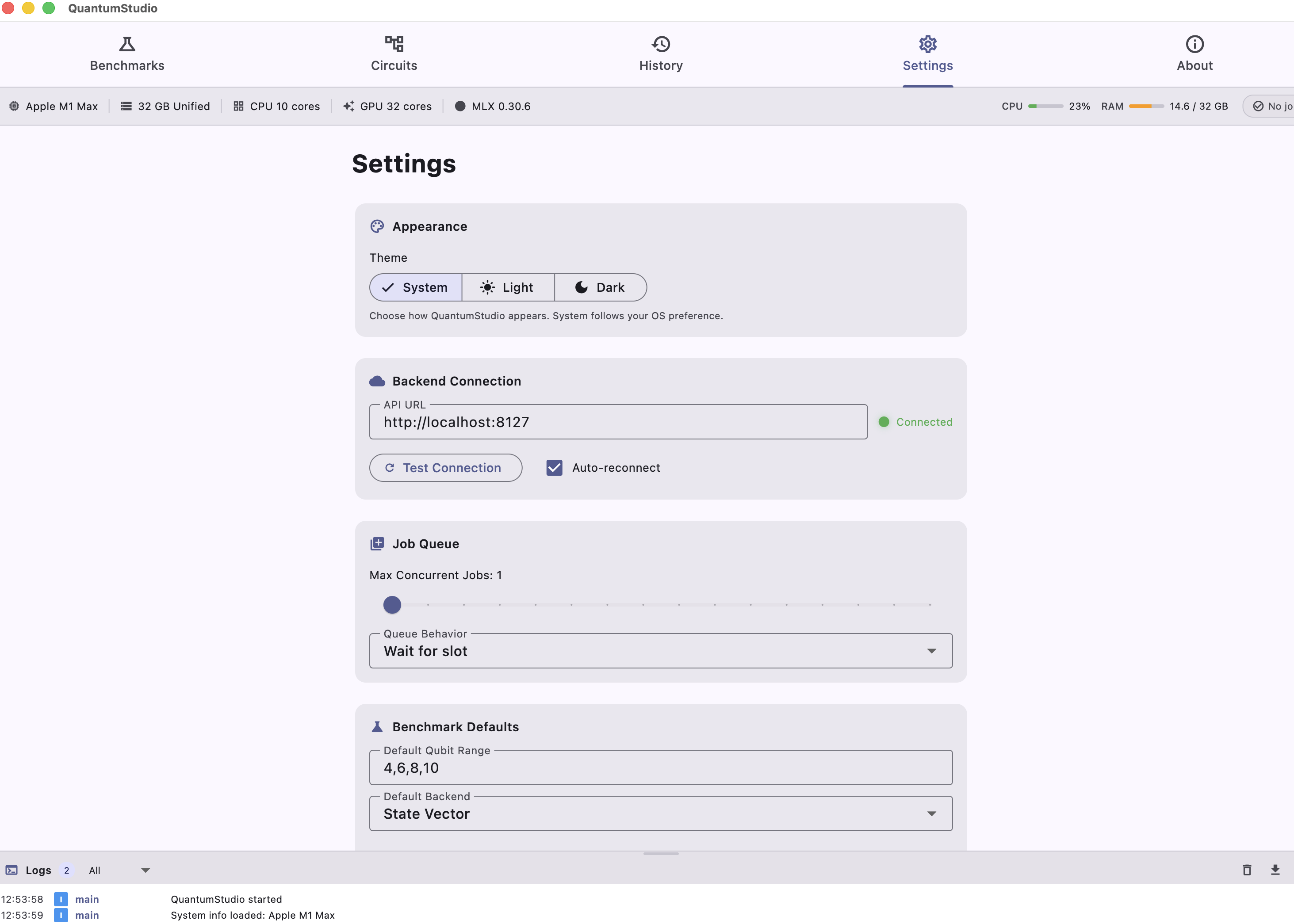
Benchmark orchestration, queueing, logs, and output review run locally on macOS, minimizing external dependencies during experiment cycles.
Current desktop snapshots from a complete local workflow: benchmark selection, run orchestration, live logs, and export-ready outputs.
This gallery maps directly to the research workflow described in the paper: define workload families, launch runs with fixed parameters, monitor state-vector execution on Apple Silicon, and collect comparable artifacts for analysis.
Instead of isolated screenshots, read this section as one continuous pipeline from circuit definition to reproducible report output.
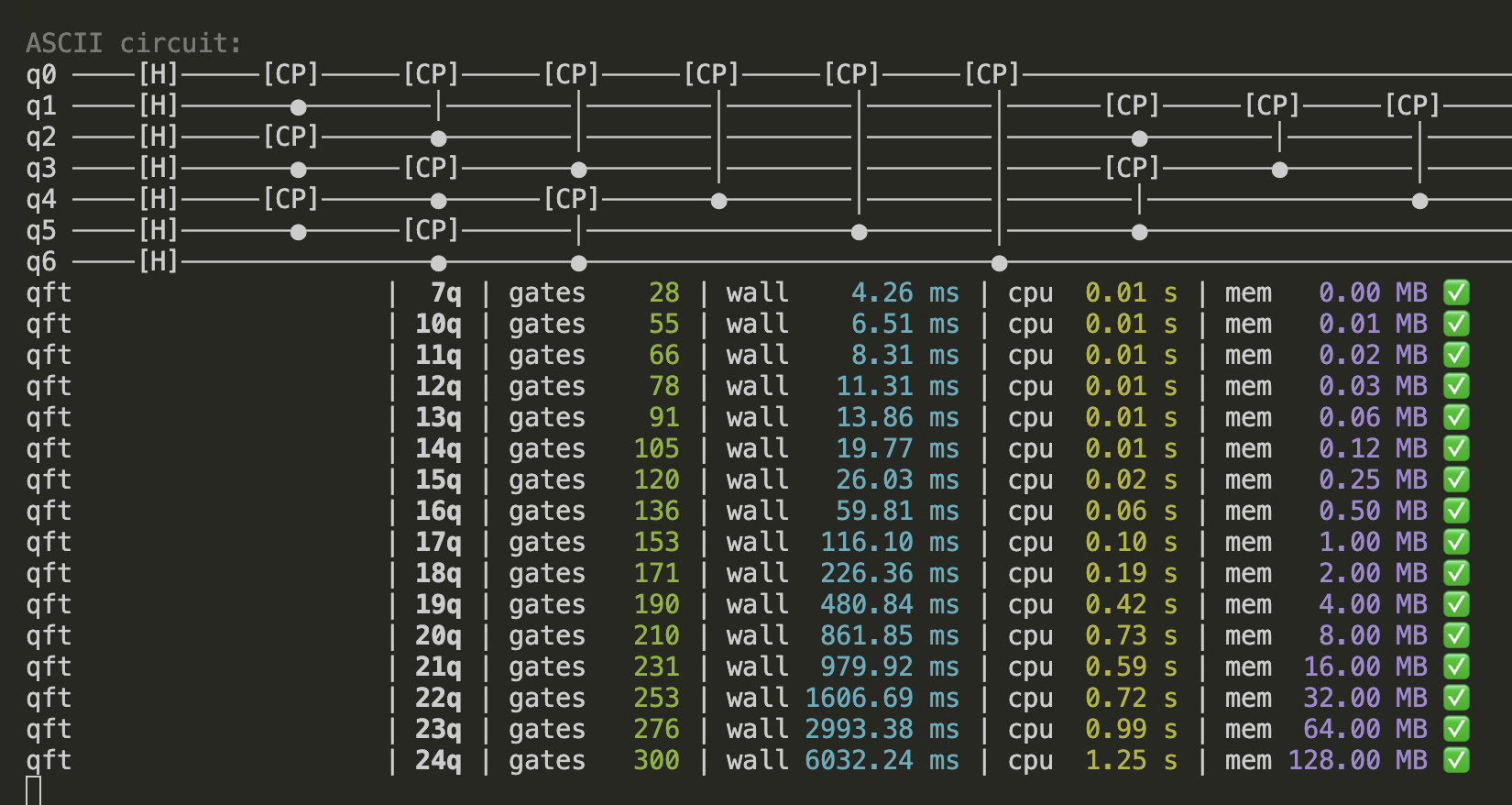
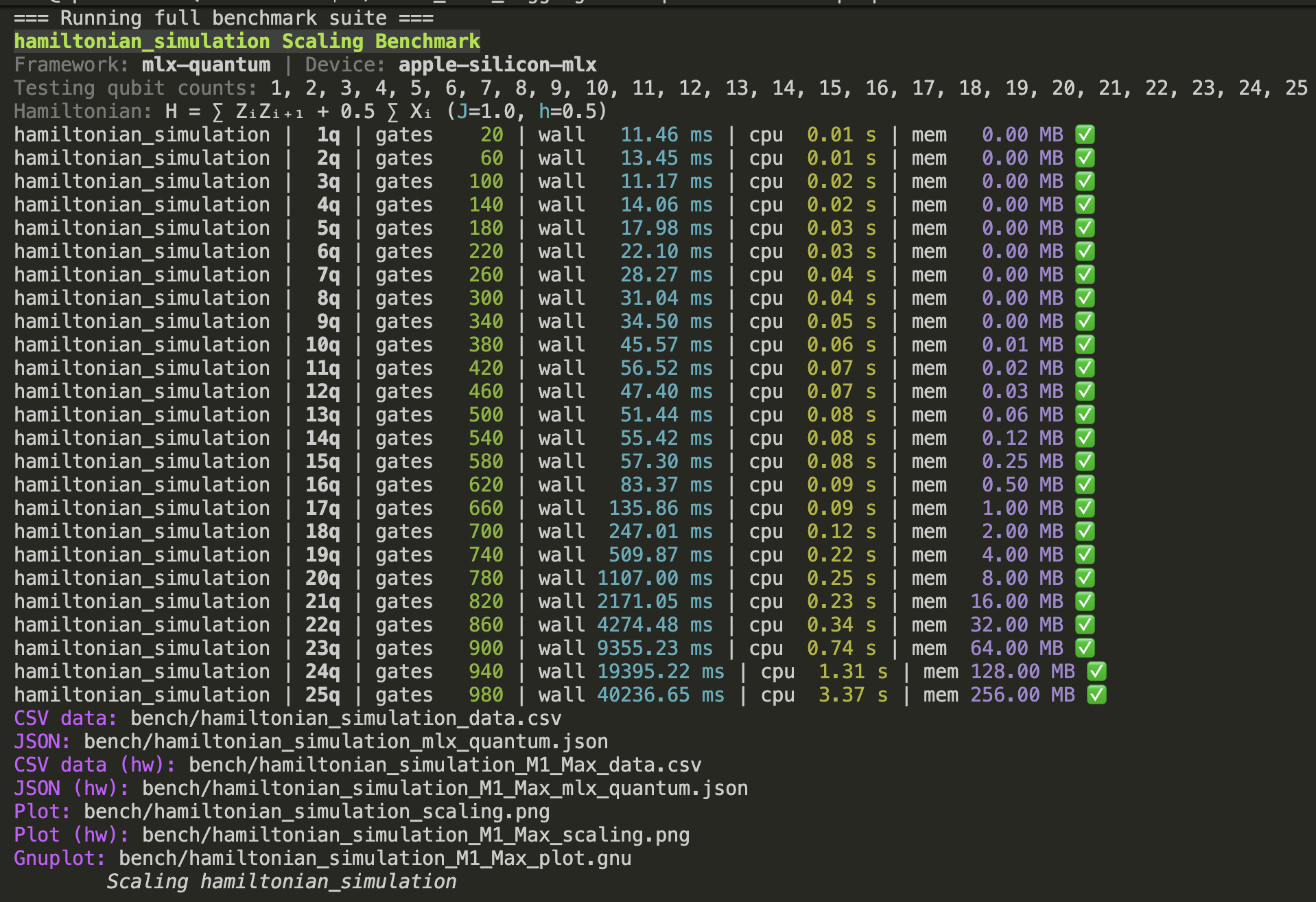
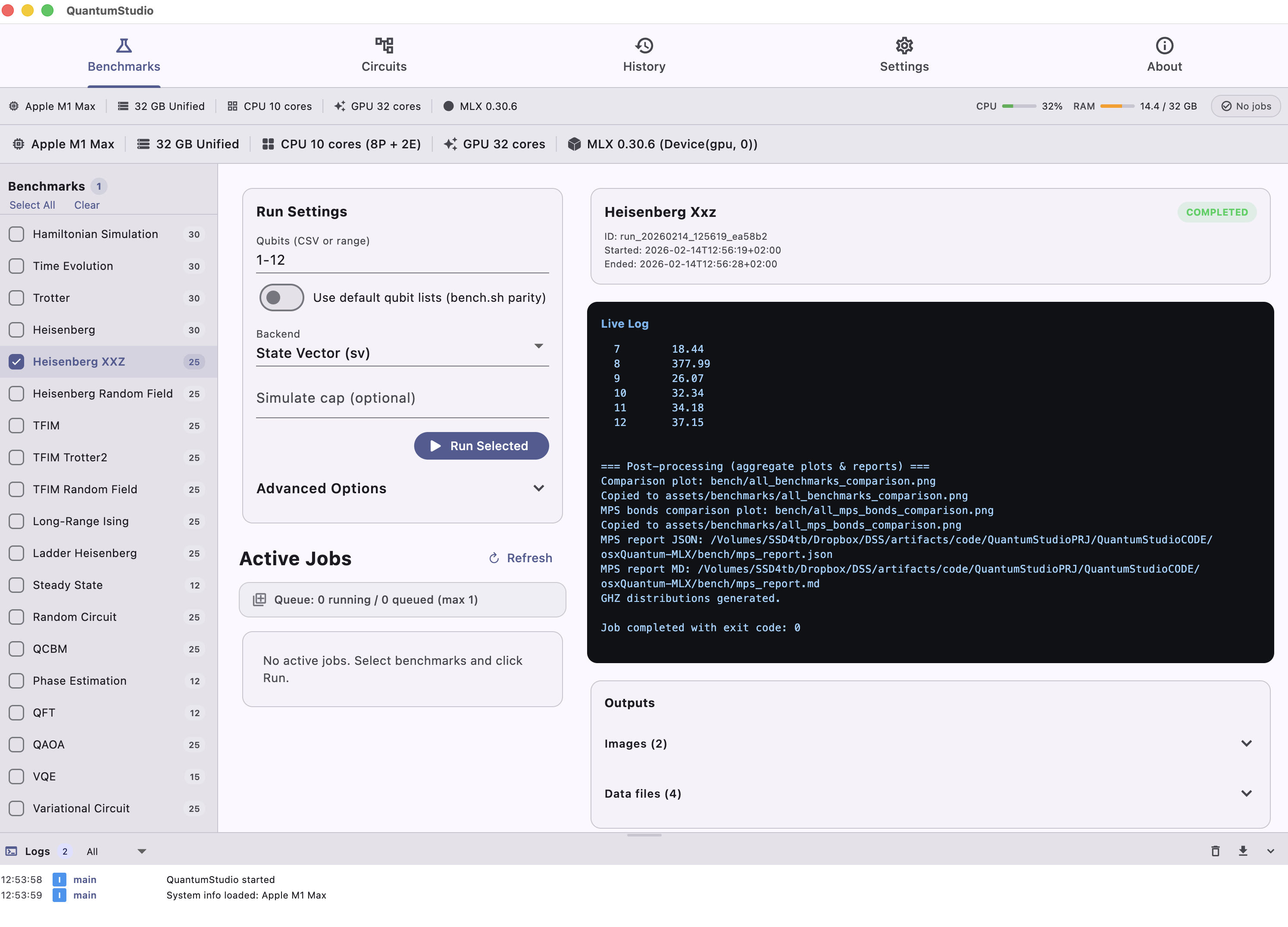
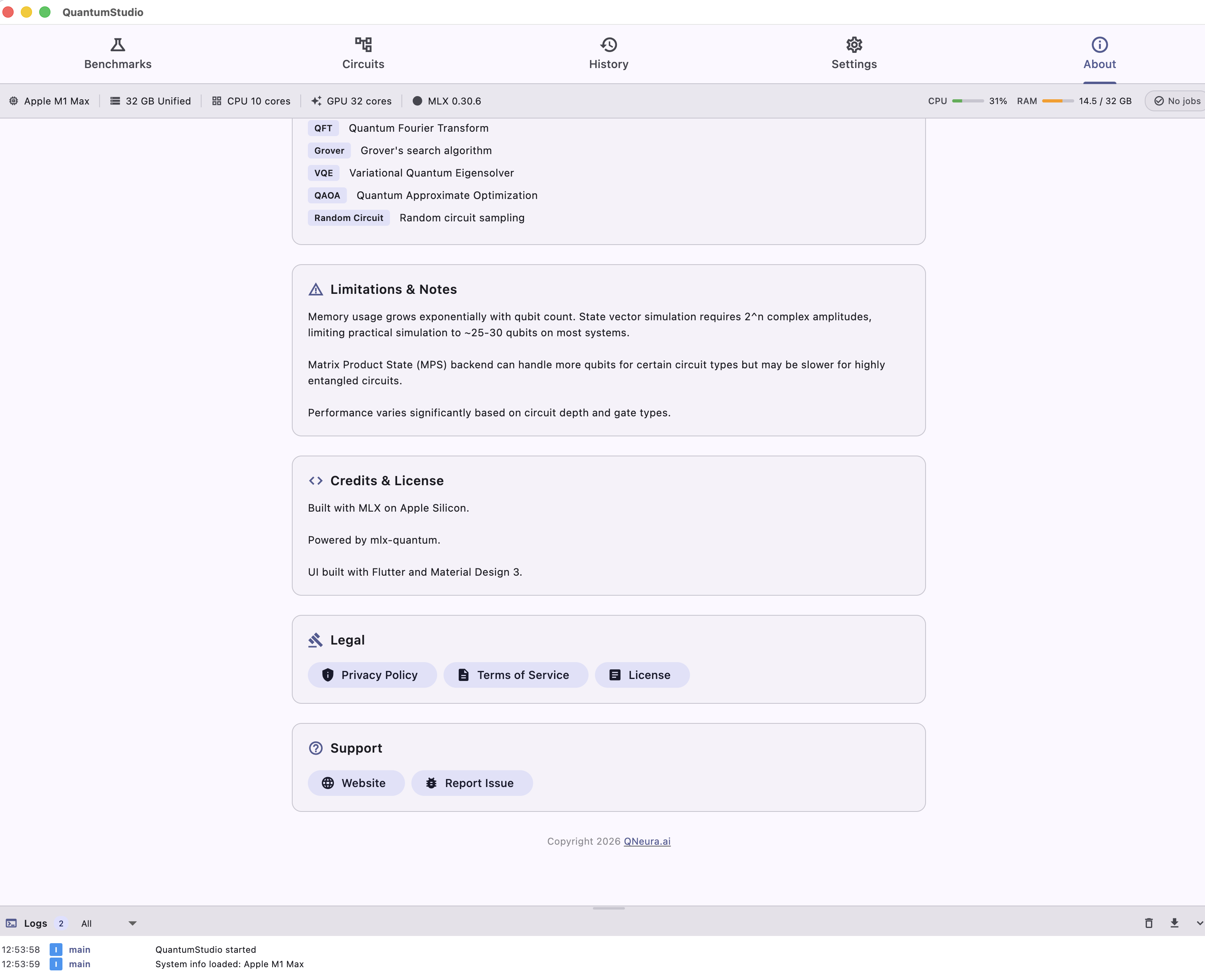
Comprehensive benchmark coverage including standard OpenQASM workloads, variational algorithms, and time-evolution simulations.
Reproduces OpenQASM workloads across chemistry, optimization, arithmetic, and ML circuits.
Fourier primitives validated against analytical transforms and reference-style benchmark data.
VQE, QAOA, and QCBM with hardware-efficient ansatze and optimization loops.
Trotter-Suzuki Hamiltonian simulation (including Ising/Heisenberg-style model workloads).
| Benchmark | Representative Data | Scope | Notes |
|---|---|---|---|
| Random Circuit | 22q: 2.45s • 23q: 5.16s • 25q: 22.40s | M-series runs | State-vector scaling snapshot |
| Variational (HE ansatz) | 22q: 2.11s • 23q: 4.44s • 25q: 19.24s | VQE / QAOA / QCBM family | Hardware-efficient ansatz profile |
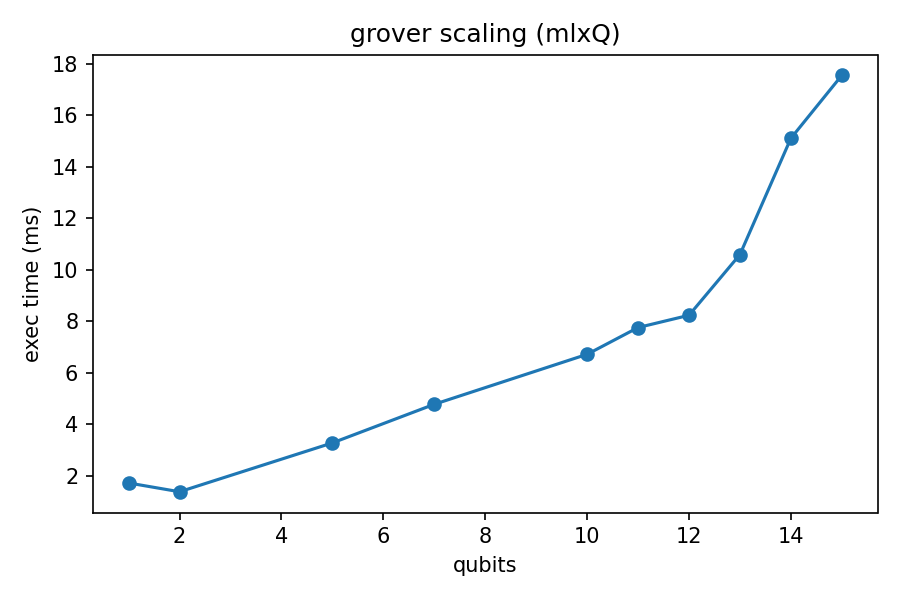
| Grover Search | 21q: 1.82s • 22q: 5.00s • 24q: 40.08s | Oracle + amplitude amplification | Rapid growth at higher qubits |
| Coverage | QASMBench, QFT, phase estimation, variational, Hamiltonian, Grover | OpenQASM + custom circuits | Designed for reproducible studies |
| Validation | 230+ executable tests | Correctness and regression checks | Includes educational QIT verification appendix |
Build circuits, launch parameter sweeps, and inspect noise behavior without sending data off your machine. Every phase of experimentation remains local by default.
osxQuantum is built around mlxQ for Apple Silicon unified memory. Because there is currently no native MLX quantum simulator, osxQuantum provides the local state-vector layer and workflow tooling directly in the app. It supports QFT, QAOA, QCBM, Grover, Hamiltonian simulation, and OpenQASM 2.0 import with reproducible artifacts validated by 150+ executable tests.
Current exported scaling plots across benchmark families.
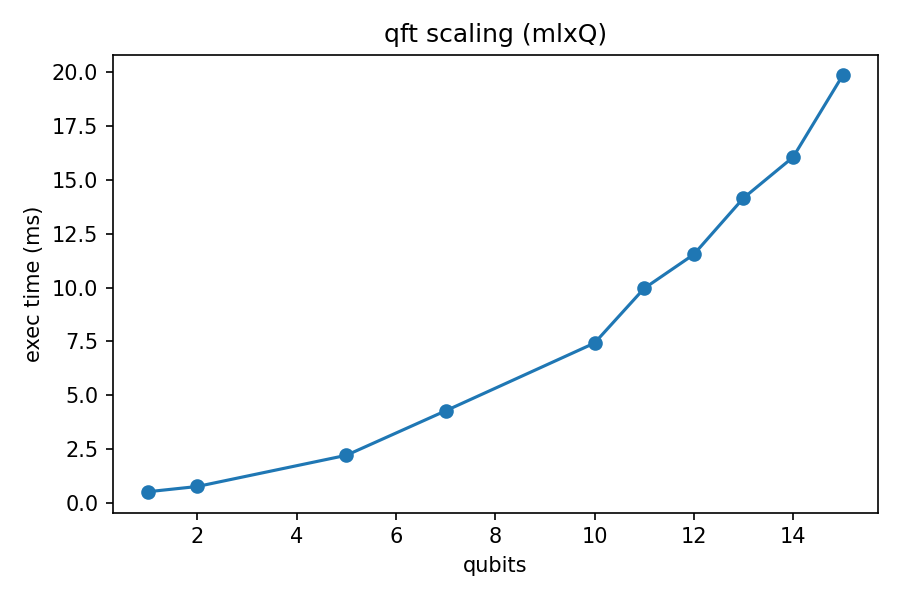
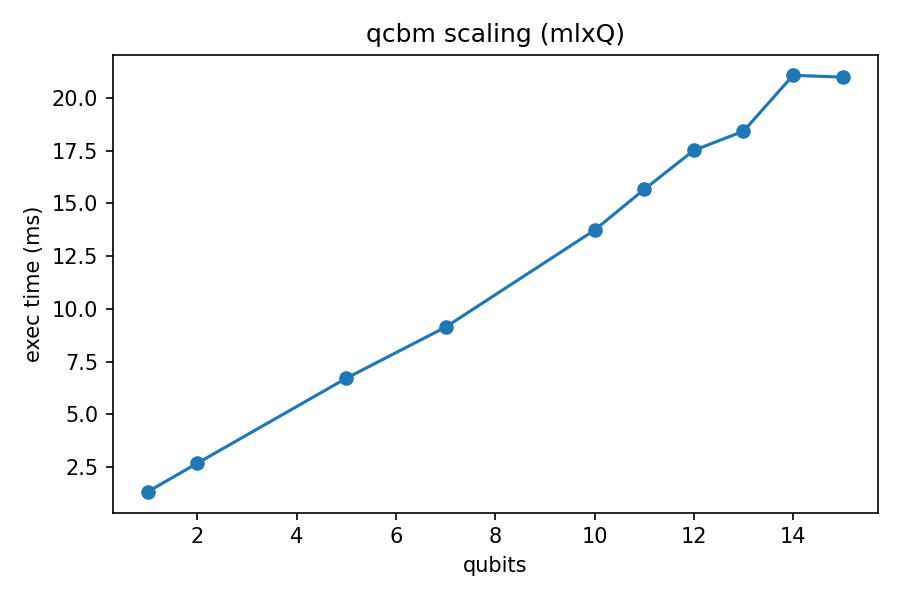
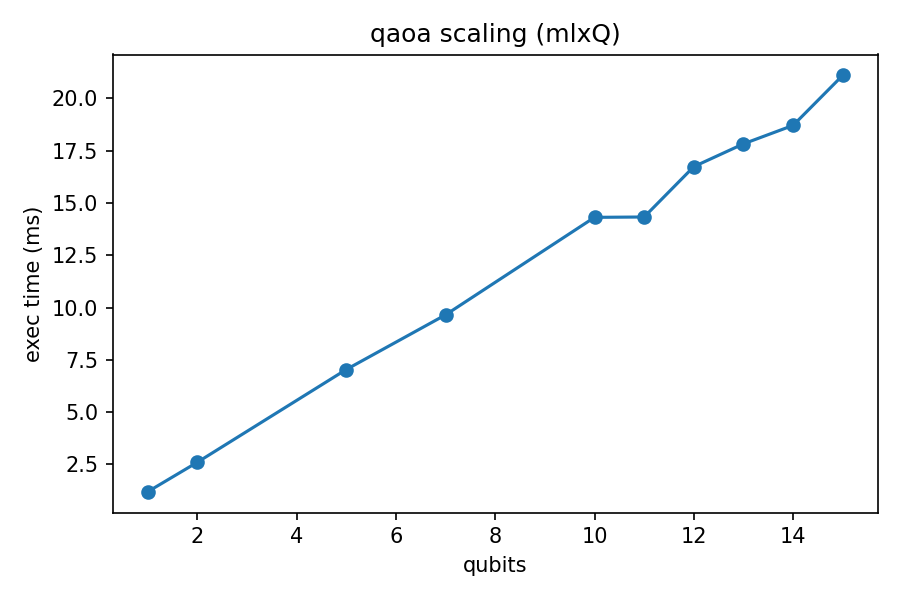
macOS binary distribution is available now. Source code is licensed under BSL-1.1 and binary releases follow the QuantumStudio Binary Distribution License.
This is an early alpha version intended for testing and development. Features may be incomplete, unstable, or change significantly before the stable release. Please report any issues on GitHub.
This macOS build is not signed by Apple. Remove the quarantine attribute in Terminal before first launch:
# If installed to /Applications (system-wide):
xattr -d com.apple.quarantine /Applications/QuantumStudio.app

# If installed to ~/Applications (user-only):
xattr -d com.apple.quarantine ~/Applications/QuantumStudio.app
Why? macOS quarantines downloaded apps. For unsigned apps, Gatekeeper may block execution until this flag is removed.
Core simulation runs locally on your Mac. Internet is only needed for things like downloads, purchases, or visiting external resources.
No. There is currently no native MLX quantum simulator shipped as a platform runtime, which is why osxQuantum includes a local simulator stack built around mlxQ.