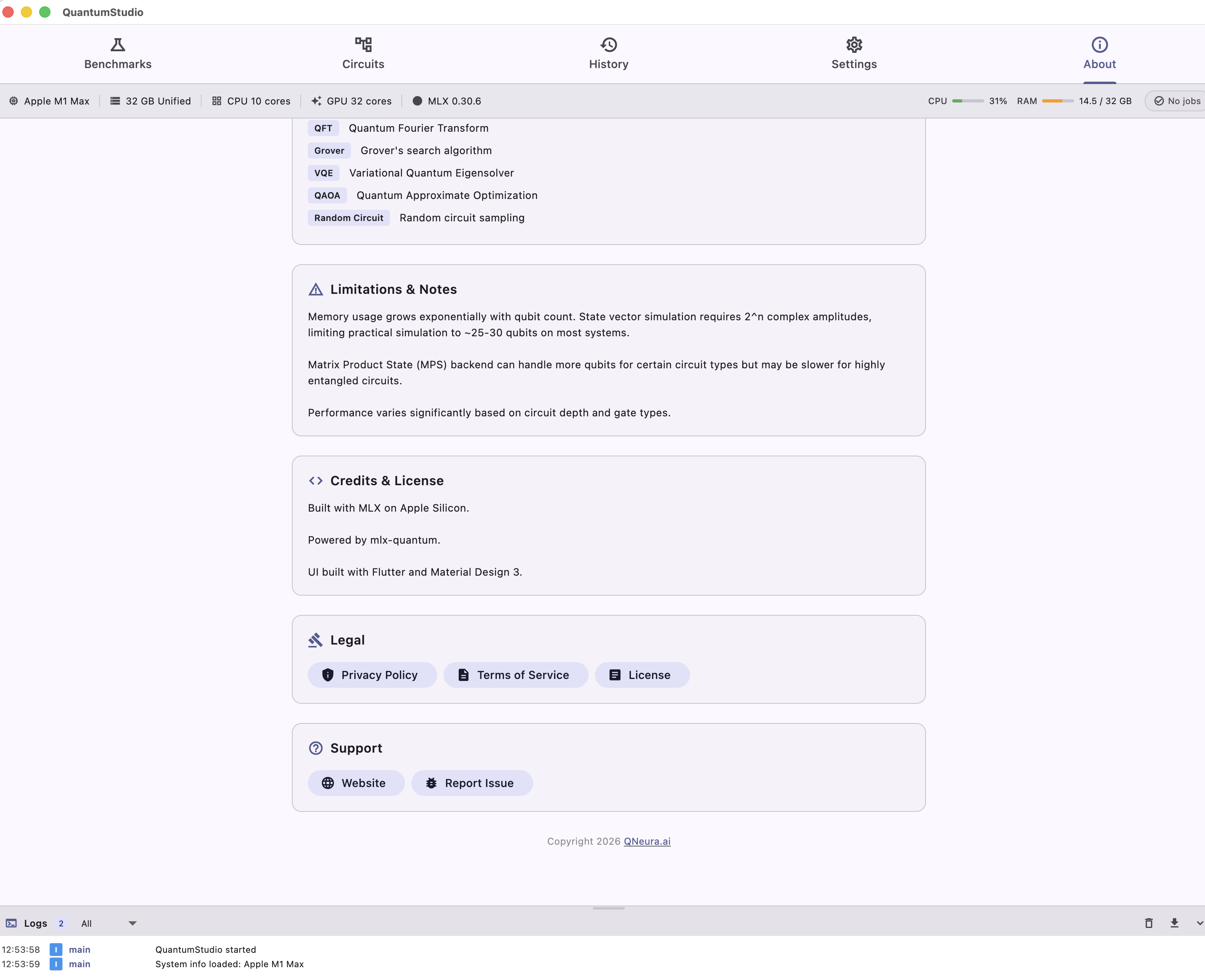
Qupertino productizes the core results from our technical report on MLX-native quantum simulation with structured-gate kernel dispatch on Apple Silicon.
Most high-performance quantum simulators are optimized around CUDA and discrete GPU memory models. Apple Silicon works differently: CPU and GPU share one unified memory pool, which removes explicit host-device copies and simplifies the programming model. Qupertino ships two measured performance tiers. The pure-MLX tier uses structured-gate kernel dispatch: diagonal gates run as broadcast phase multiplies, controlled gates as masked half-state updates, and SWAP as an axis permutation, all in MLX array operations. The Metal shader tier (one flag: MLXQ_METAL_KERNELS=1) adds hand-written kernels for every structured layer family — phase-LUT diagonals, GF(2) permutation gathers that run any CNOT/X/SWAP block as one pass, fused single-qubit layers, radix-4 QFT and Walsh–Hadamard butterflies — reached through fusion detectors that preserve circuit semantics exactly and are parity-tested against the pure path.
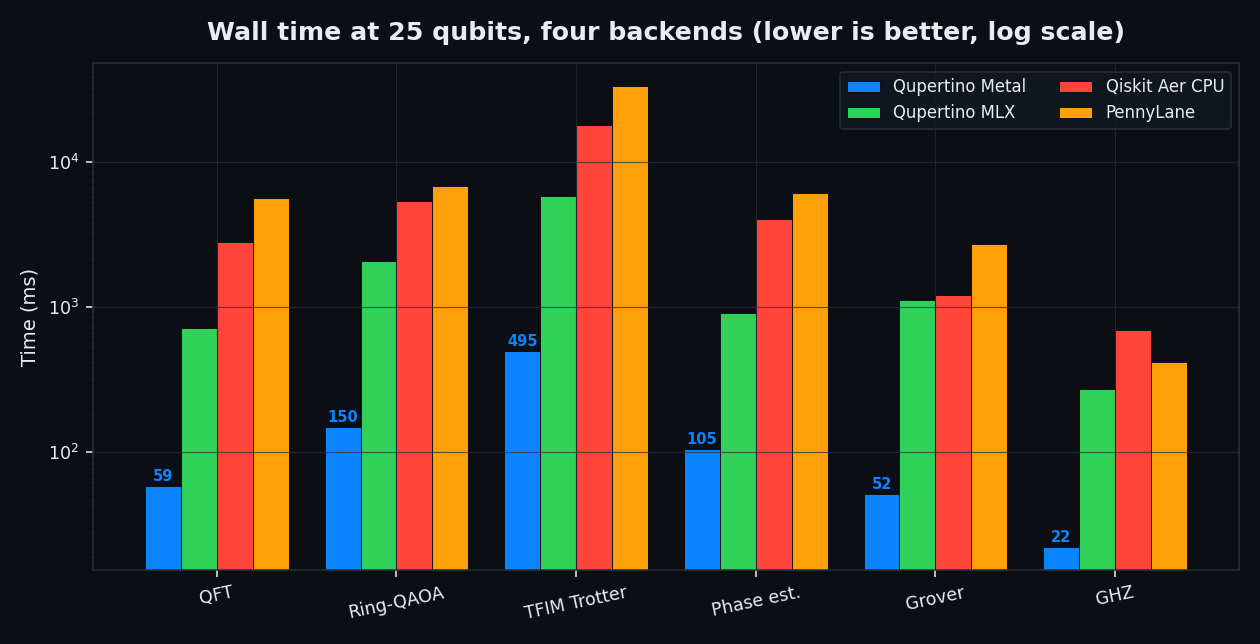
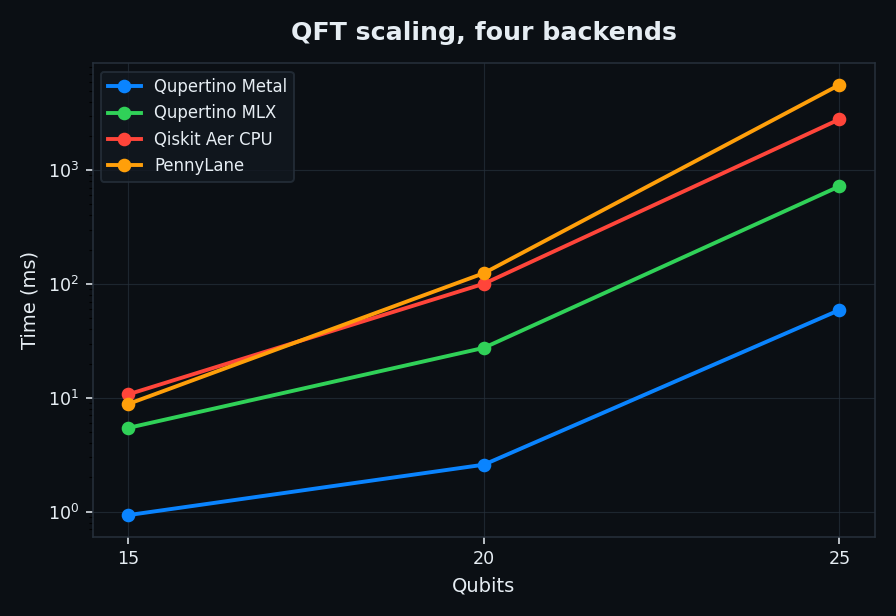
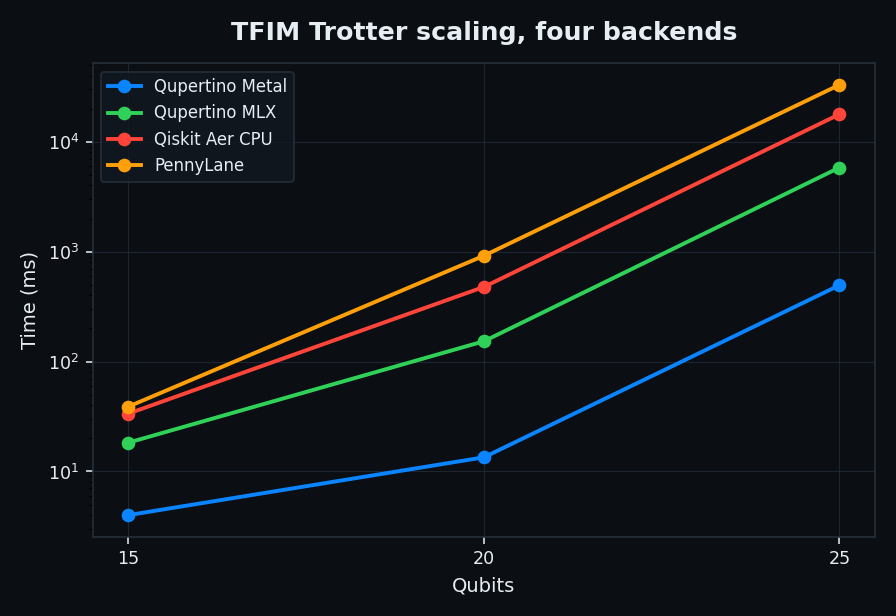
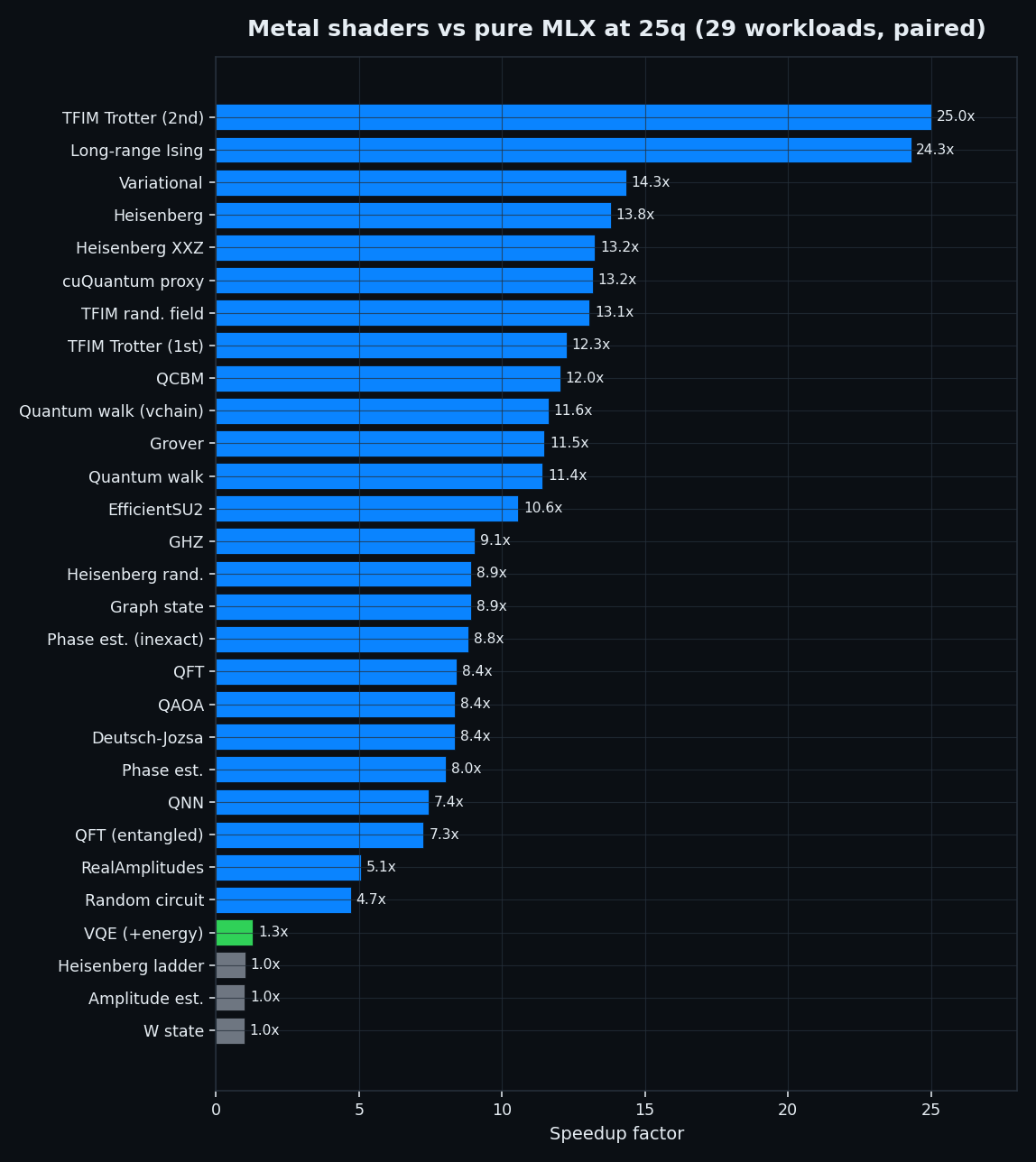
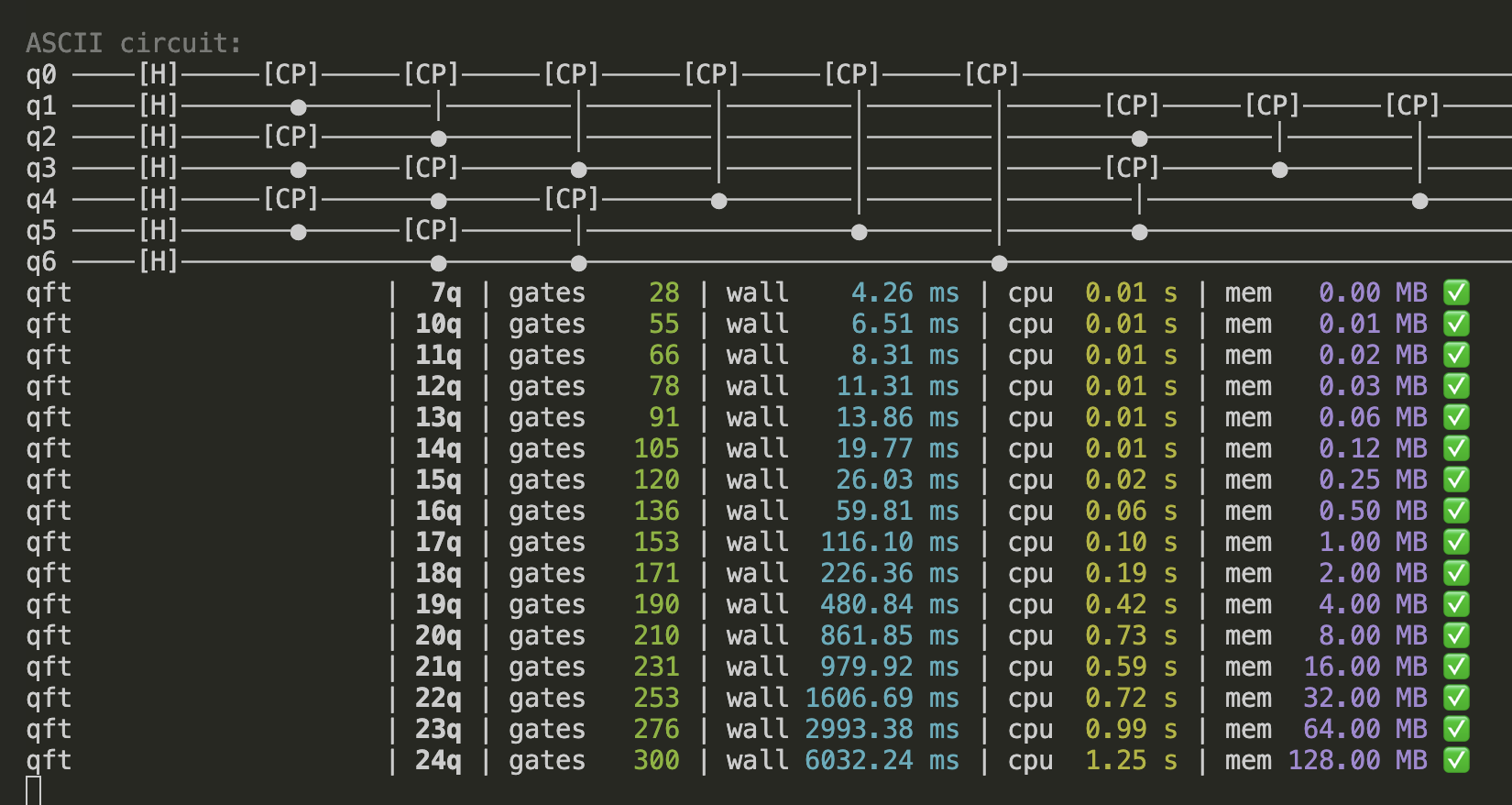
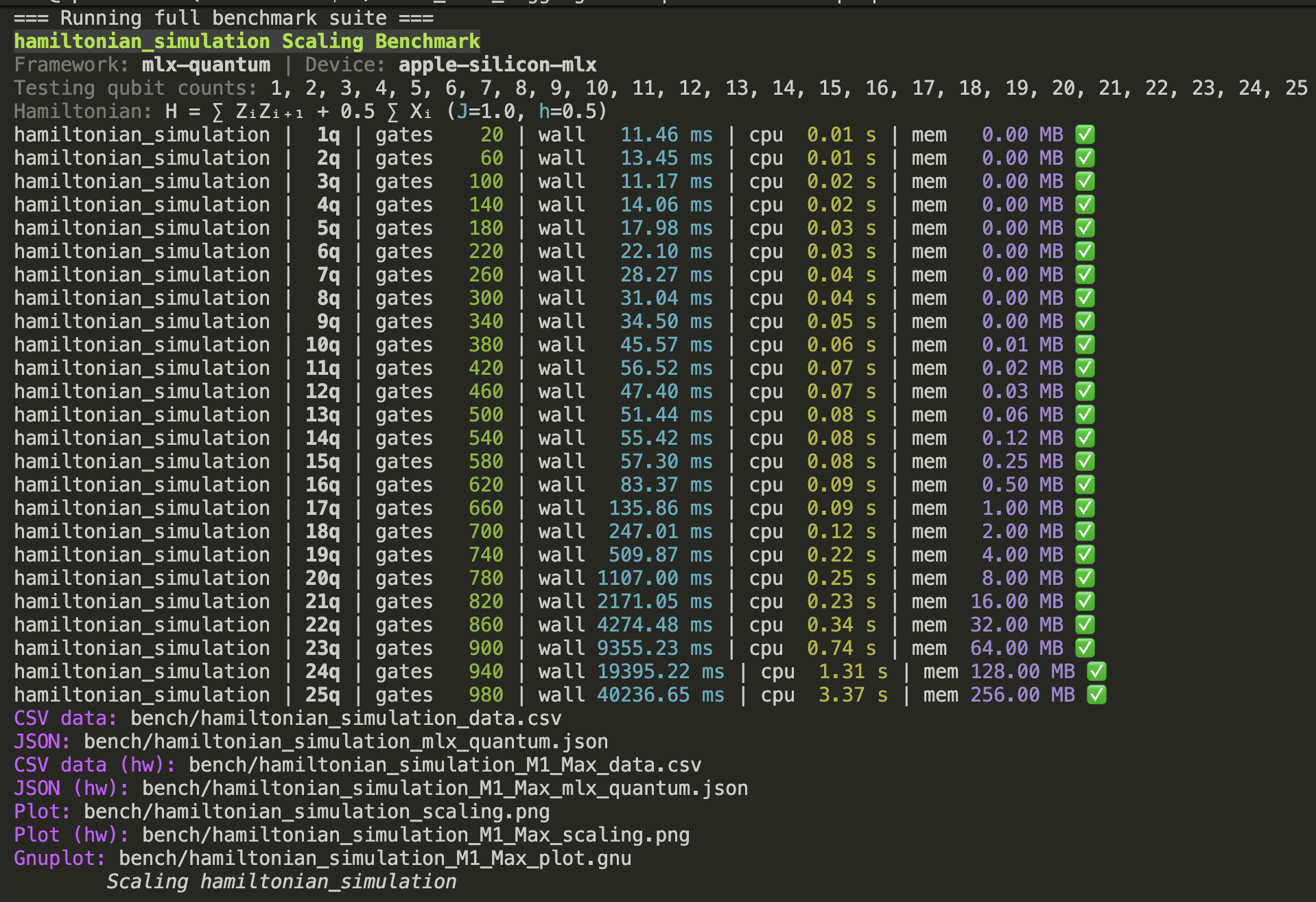
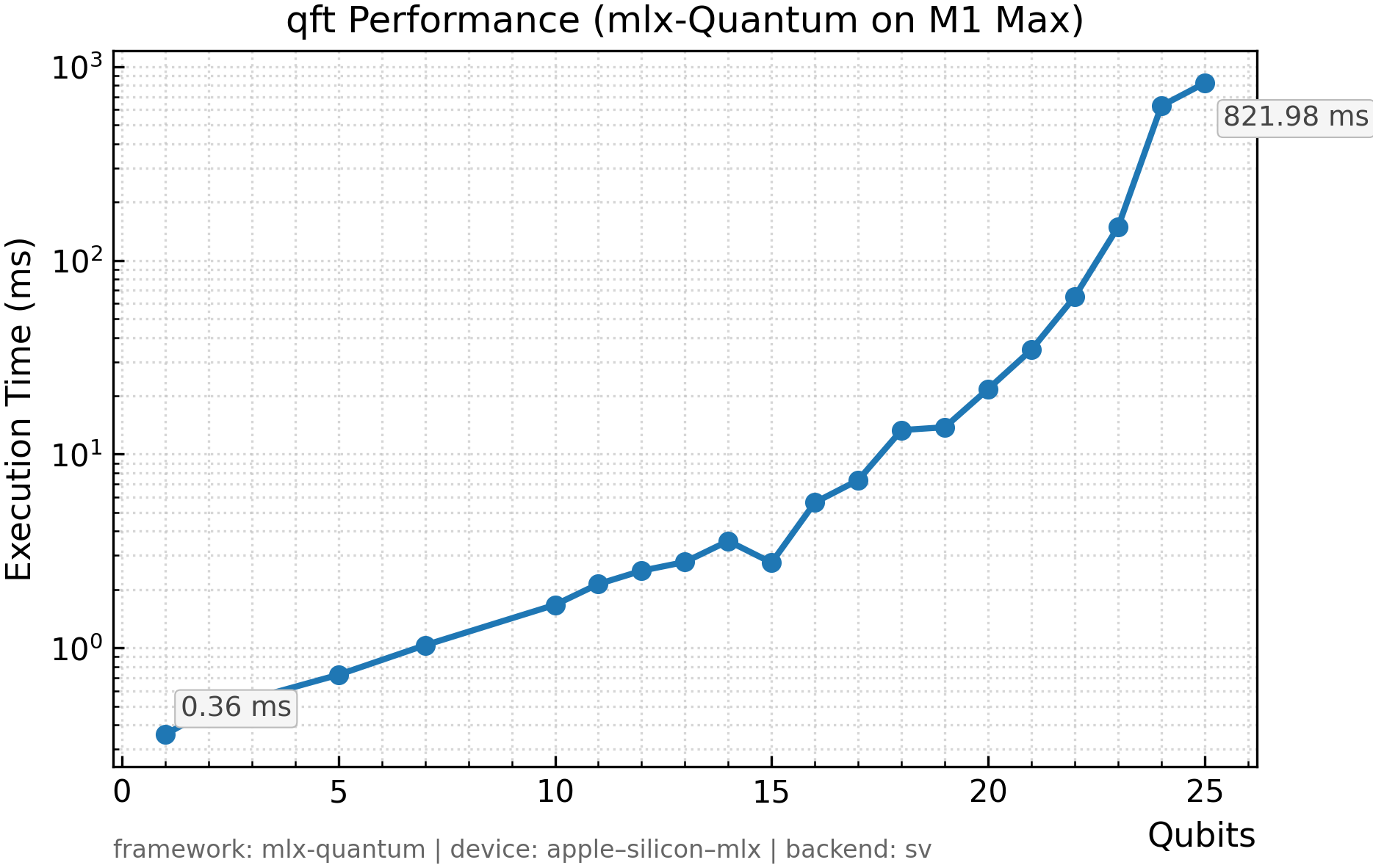
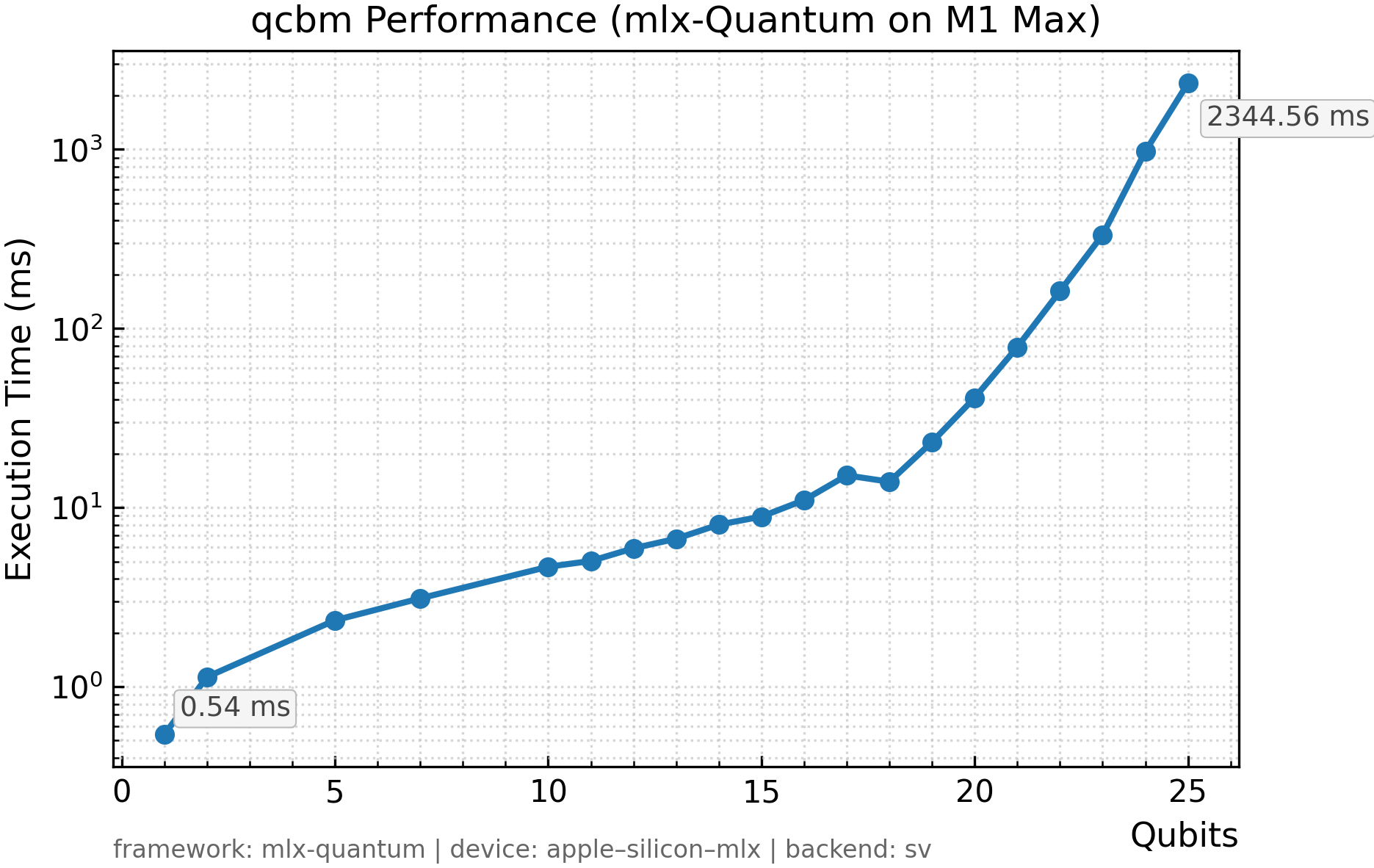
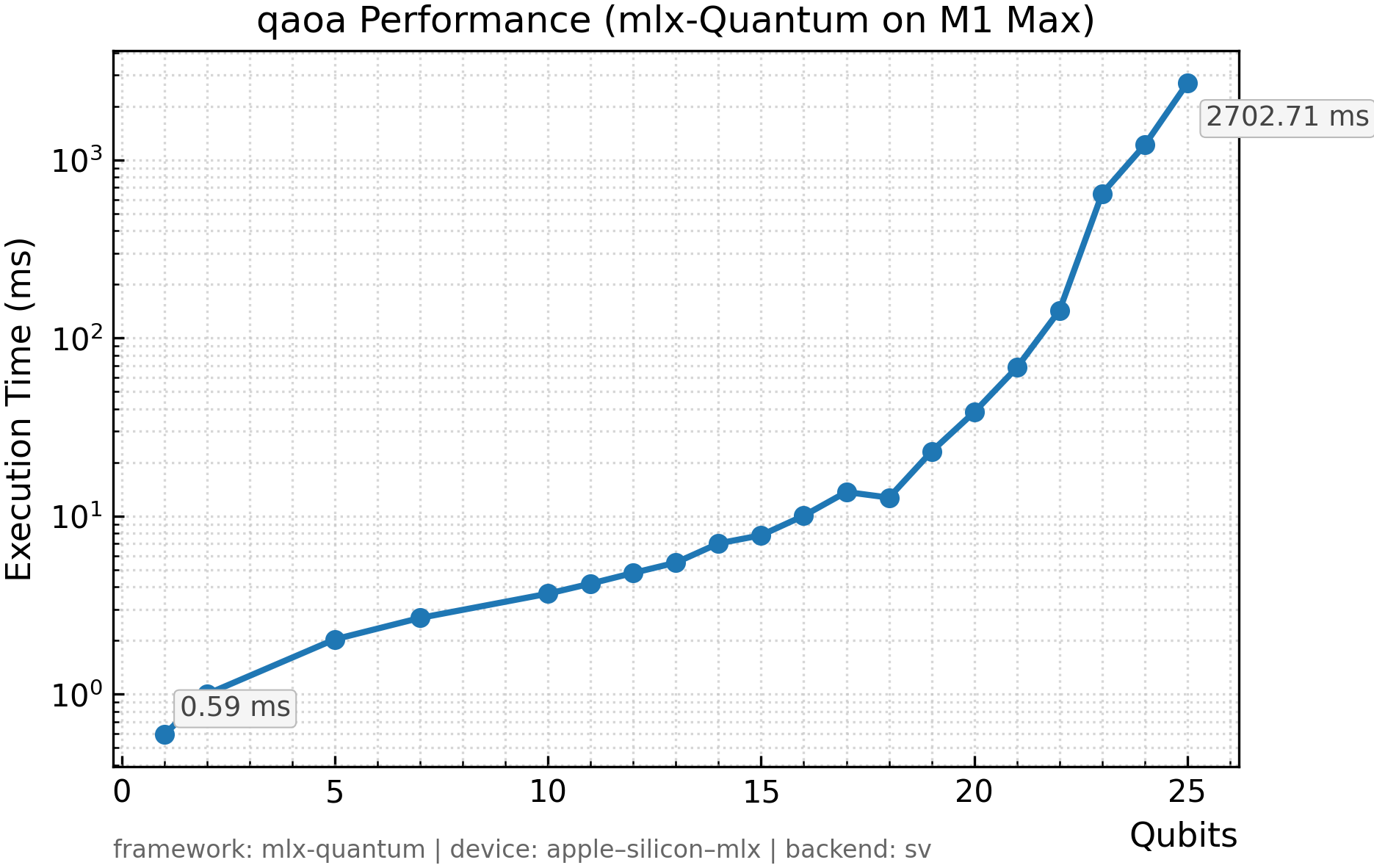
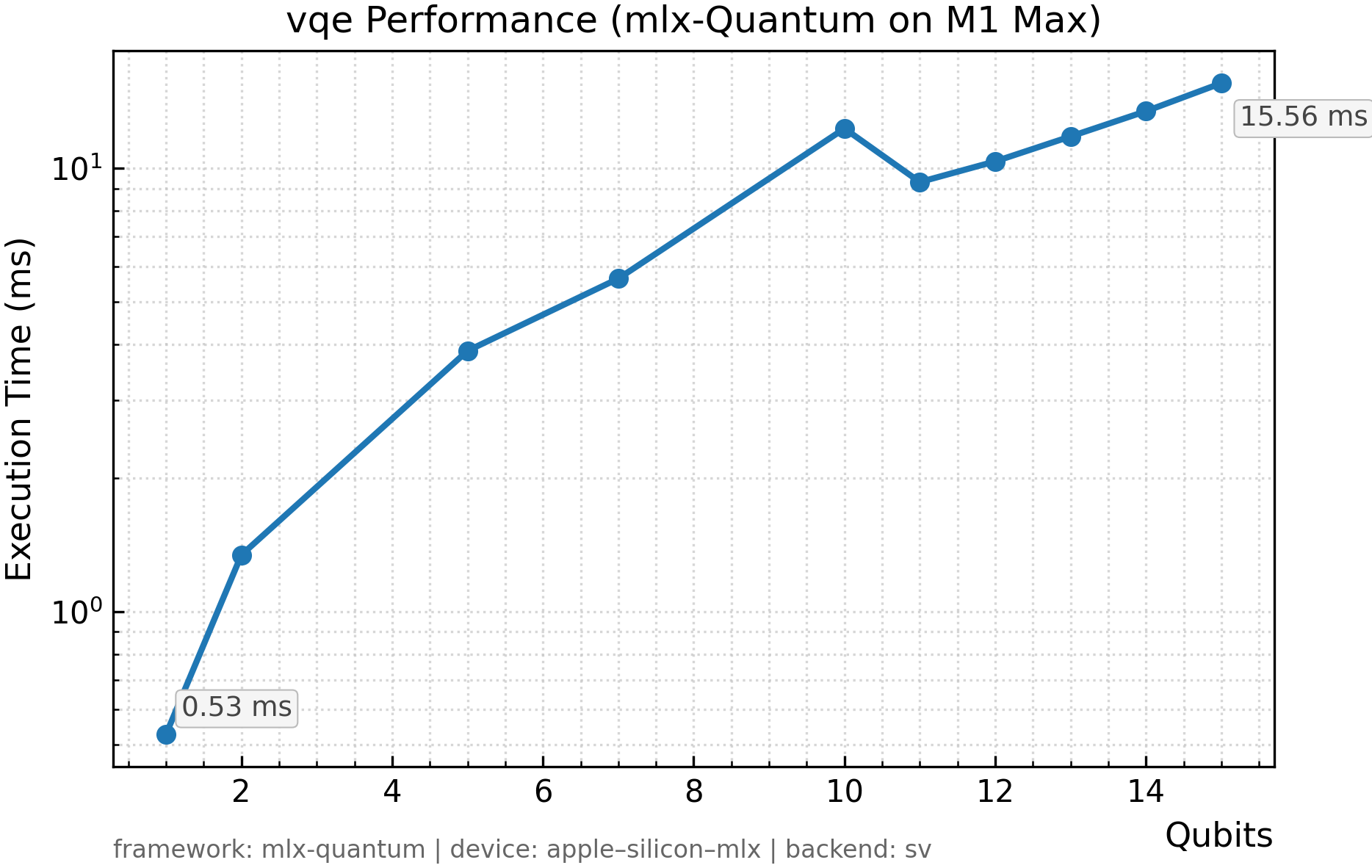
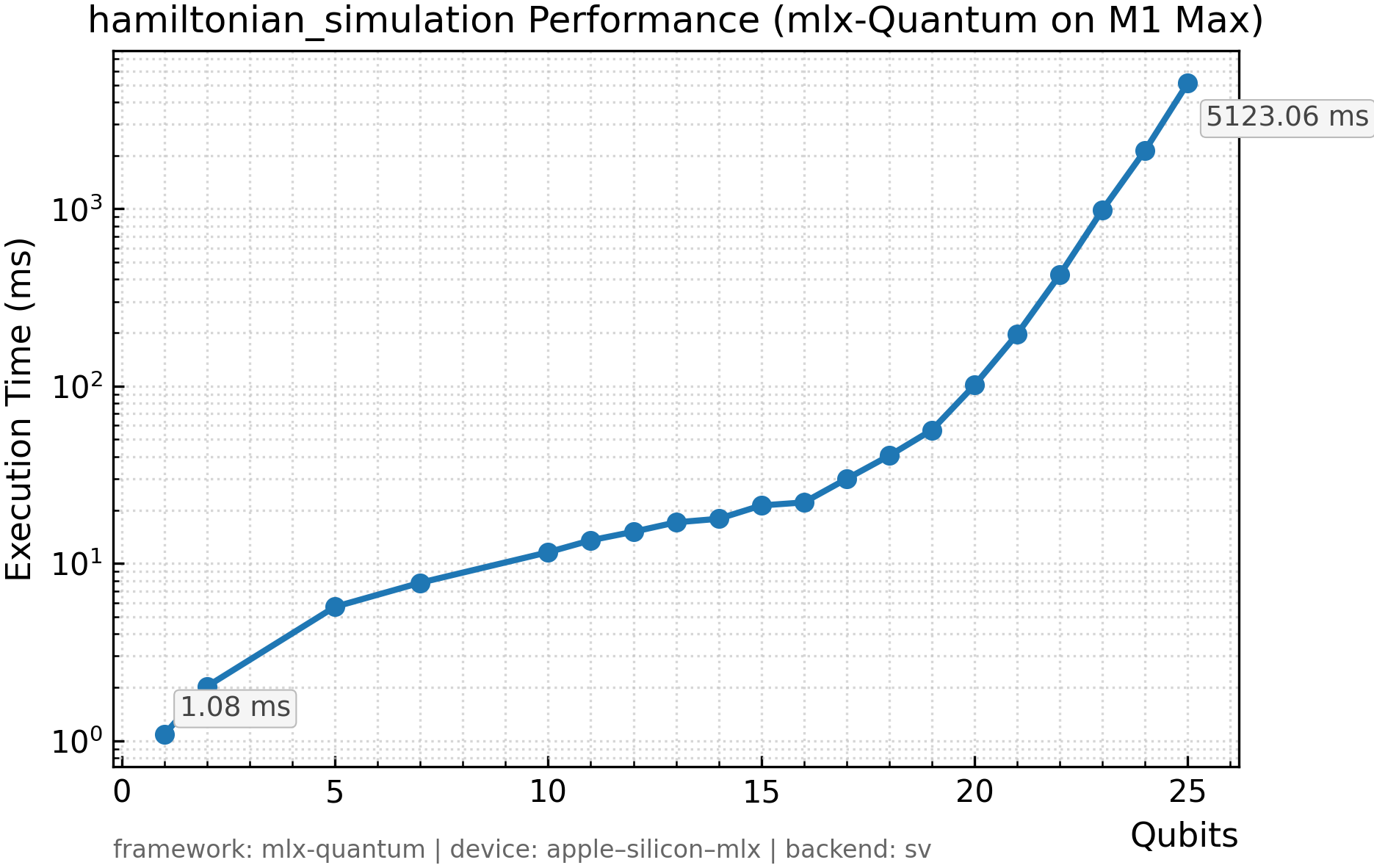
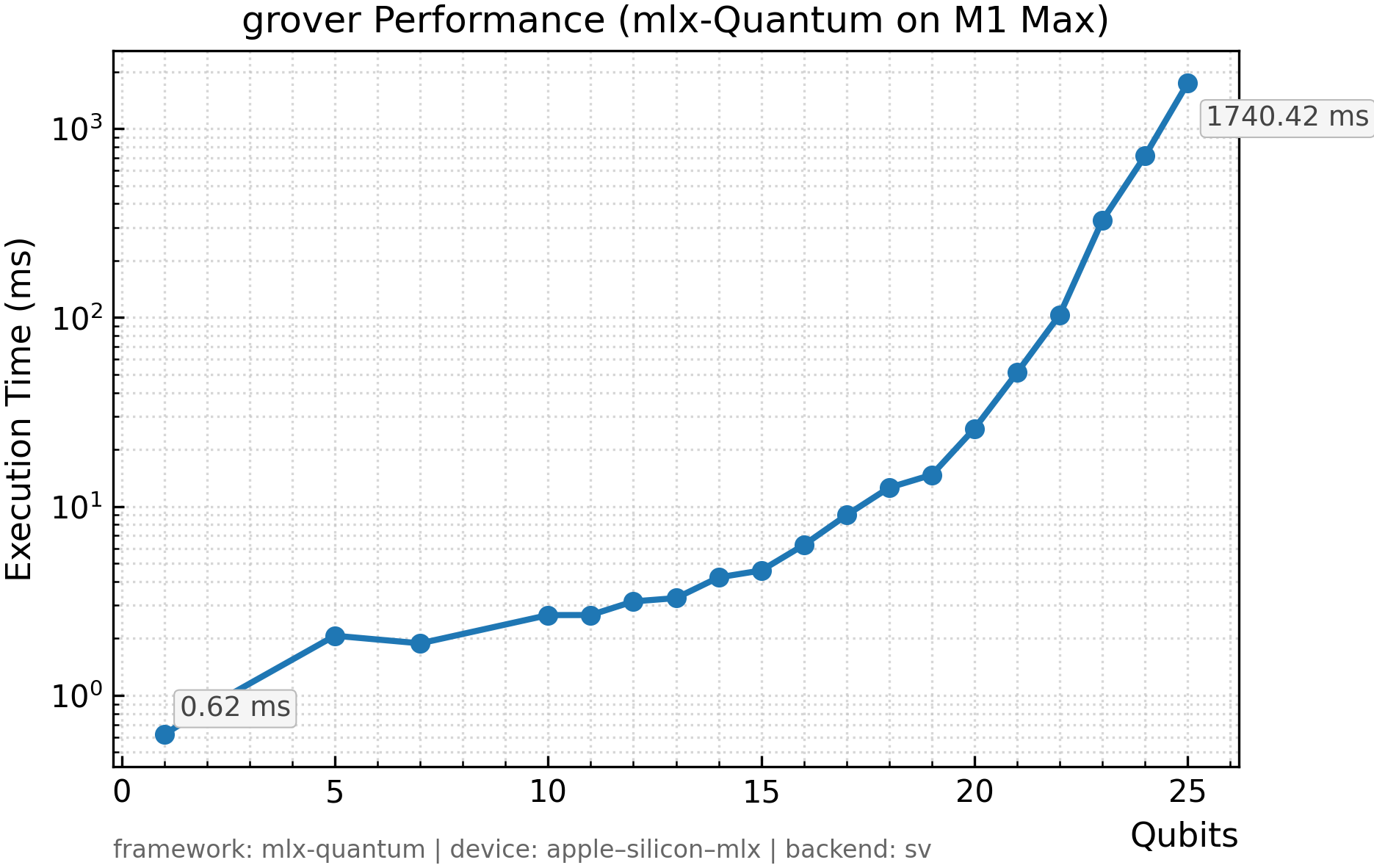
In our M1 Max evaluations (32 GB unified memory, four-way interleaved ten-repeat protocol on gate-identical circuits), the Metal shader tier is fastest in all 18 comparison cells against Qiskit Aer CPU and PennyLane lightning.qubit: 25-qubit QFT completes in 59 ms (47× over Aer, 95× over PennyLane, paired per-repeat ratios), TFIM Trotter evolution in 0.50 s (36× and 67×), and GHZ preparation in 22 ms. The pure-MLX tier alone remains fastest among the CPU-comparable backends on most 25-qubit workloads. Across the full 29-workload suite, the shader tier accelerates 26 workloads by up to 25× over pure MLX. The same architecture supports reproducible benchmark artifacts (CSV/JSON), OpenQASM 2.0 circuit import, and broad algorithm coverage across VQE, QAOA, QCBM, QFT, Grover, and time-evolution workflows.
Reliability is built into the stack: the framework is validated with 234 regression tests and benchmark alignment against widely used suites and ecosystems, including QASMBench, PennyLane, Yao.jl, and Qulacs. The website experience you are viewing is the product-facing layer over that same technical foundation.